
Destiny in Munich
By DK01__
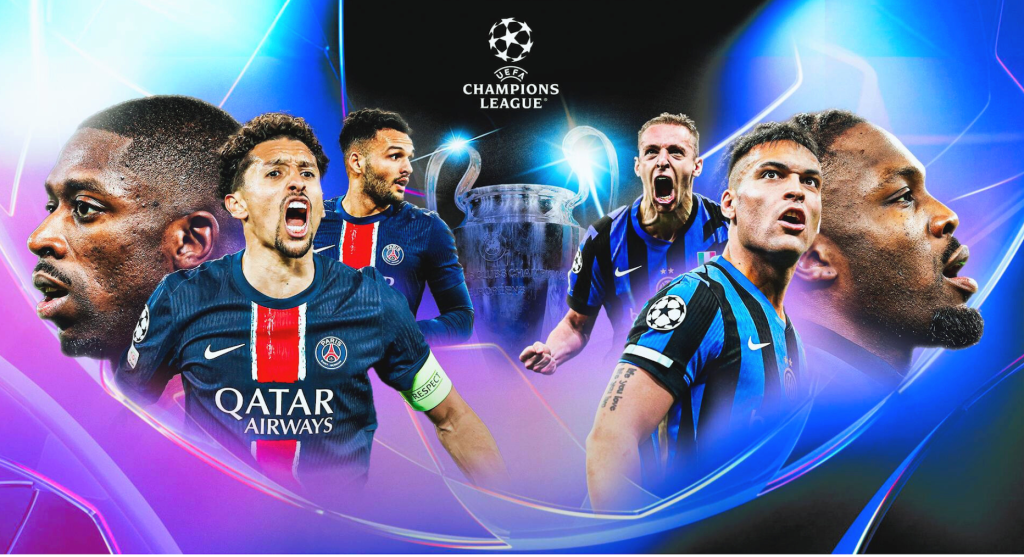
On Saturday night at the Allianz Arena in Munich, European football reaches its crescendo as Paris Saint-Germain and Inter Milan face off in one of the most fascinating Champions League finals in recent memory.
PSG arrive as Ligue 1 champions, Coupe de France winners, and now 90 minutes from completing an historic treble — a feat no French side has ever achieved. For Inter, it’s a chance to claim their fourth European crown and salvage silverware from a season that once promised a domestic treble but is now at risk of ending empty-handed.
It’s a clash not just of footballing cultures, but of ideologies. Luis Enrique’s PSG are expansive, fluid, and high-octane. Simone Inzaghi’s Inter are disciplined, reactive, and razor-sharp in transition.
For PSG, this is a moment of reckoning. A decade of financial dominance, marquee names, and persistent continental underachievement has led to this: a shot at the treble and the chance to become the first French side to do so. No French team has won the Champions League since Marseille lifted the trophy—also in Munich, also against a Milanese opponent—in 1993. The ghosts of 2020’s final loss to Bayern linger, but this team under Luis Enrique feels different: more structured, more mature, more adaptable.
Inter, on the other hand, are chasing their fourth Champions League trophy and redemption for the heartbreak in Istanbul. Simone Inzaghi’s men were within touching distance of a treble this season before late slip-ups in Serie A and the Coppa Italia. Now, with one final 90-minute performance, they can immortalise this campaign.
How They Got Here
PSG’s Route
In November, PSG looked anything but contenders. They were a side underwhelming, inconsistent, and dangerously close to an early Champions League exit. Defeats to Atletico Madrid, Bayern Munich, and Arsenal painted a picture of a team struggling to find its rhythm in the newly introduced league phase — a format that punishes volatility and rewards sustained performance. PSG limped to a 15th-place finish, barely scraping through to the knockout rounds, with their flaws exposed and their ambitions hanging by a thread.
But what followed has been nothing short of extraordinary. Their revival began with a thunderous 10–0 aggregate demolition of Brest in the play-off round — a result that turned heads but was met with scepticism due to the opposition. Then came the turning point: a round-of-16 showdown with Liverpool, a club whose European pedigree is among the best of the best. After a two-legged affair, PSG prevailed on penalties at Anfield — a statement not just of intent, but of resilience. From there, they edged a highly organised Aston Villa side 5–4 on aggregate in the quarter-finals, surviving tense moments in both legs.
The semi-final victory over Arsenal was perhaps the most complete version of this PSG project. A commanding 3–1 win across two legs showcasing the tactical flexibility and emotional maturity often lacking in previous iterations of the club. No longer reliant on star power alone, Luis Enrique’s men have evolved into a coherent, hungry, and well-drilled unit.
All the while, their domestic dominance has continued. PSG wrapped up Ligue 1 with games to spare and added the Coupe de France to their cabinet with a 4–0 thrashing of Reims in the final. With a domestic double already secured, they now stand just one match away from an unprecedented treble — one that would finally deliver the European crown they’ve long coveted.

Inter’s Route
If PSG’s route has been defined by drama and transformation, Inter Milan’s has been all about control and consistency. Simone Inzaghi’s side have moved through the competition like seasoned professionals — rarely dazzling in a single moment, but always effective over 90 minutes. Their group-stage campaign was near-flawless. They lost just once — a 1–0 away defeat to Bayer Leverkusen — and conceded only a single goal across eight matches, the best defensive record in the competition. It was a signal of what was to come: a team built on structure, defensive clarity, and measured attacking intent.
In the round of 16, Inter comfortably saw off Feyenoord, controlling both legs with minimal fuss. That set up a blockbuster quarter-final with Bayern Munich — a tie that lived up to expectations. Inter edged the Germans over two legs, with their compact shape and set-piece organisation proving decisive. Lautaro Martínez’s leadership in the forward line was central, as was the composure of Çalhanoğlu and Barella in midfield.
But it was in the semi-final where Inter’s mettle was truly tested. Drawn against Barcelona, they played out a two-legged thriller that ended 7–6 on aggregate — a chaotic, seesawing clash that pushed both teams to the limit. Inzaghi’s men showed another side of themselves: they could still execute surgical counters and keep their heads in chaos.
Unlike PSG, however, Inter arrive in Munich without domestic silverware. Having faltered late in Serie A and fallen short in the Coppa Italia, the Champions League has become their last shot at glory this season. For Inzaghi’s players — many of whom felt the sting of defeat in Istanbul against Manchester City in 2023 — this is about writing the wrong.

How Inzaghi’s Inter Dictate Without the Ball
Simone Inzaghi’s Inter Milan are an exquisite paradox — a side defined by structure yet devastating in moments of tactical anarchy. What makes them unique is their ability to shape-shift within games, controlling tempo without necessarily controlling possession. Where some teams seek dominance through the ball, Inter achieve it through manipulation: of space, shape, and opponent psychology.
At their core, Inter operate from a base 3-5-2, but this is merely a launchpad for a system that flows like liquid across phases. During deep build-up, the shape often resembles a 3-1-5-1, with goalkeeper Yann Sommer stepping high, Hakan Çalhanoğlu dropping into the first line, and Alessandro Bastoni or Yann Bisseck pushing forward to create numerical overloads. The back three become playmakers, with Bastoni in particular stepping into midfield to connect or bypass pressure with disguised passes.
When Inter reach higher zones, the formation warps again with wing-backs Denzel Dumfries and Federico Dimarco pushing high and wide, and midfielders occupying advanced half-spaces. One forward — usually Lautaro Martínez — drops into the pocket to link play, while Marcus Thuram stays high to pin defenders. It’s a dynamic that stretches backlines both vertically and horizontally.
Defensively, Inter revert into a compact 5-3-2, clogging central zones and forcing opponents wide. The wing-backs drop deep, the midfield three stay narrow, and the back three stay aggressive in duels. But Inzaghi isn’t a reactive manager — this compactness is not about containment; it’s a springboard for disruption.
Following Pressure, Creating Traps
Inter’s build-up play is rooted in one of the most underrated tactical principles: pressure-following. They draw opponents into pressing triggers — and then vacate. When a full-back steps out to press Dumfries or Dimarco, a midfielder like Nicolò Barella will dart into the vacated space. When that midfielder is tracked, Lautaro drops short, linking with one-touch layoffs or wall passes. These deliberate manipulations are honed through repetition — bait the press, pull apart the shape, and then explode into the space behind.
The underlapping centre-backs are a signature feature of Inzaghi’s system. Bastoni, especially, operates more like a hybrid full-back or deep-lying playmaker — ghosting in behind midfielders and arriving on the blindside of man-marking systems. Against teams like PSG that press man-to-man in wide areas, these runs can destabilise their structure and overload areas where they expect numerical parity.
Midfield Balance and Wide Threats
Inzaghi’s midfield trio — Çalhanoğlu, Barella, and Henrikh Mkhitaryan — are the fulcrum of this control. Çalhanoğlu has evolved into one of Europe’s most composed deep-lying playmakers, shielding the back three while dictating rhythm. Barella is the energiser — constantly scanning, moving, and connecting the thirds — while Mkhitaryan adds guile and timing in the final third, frequently arriving unmarked on the edge of the box.
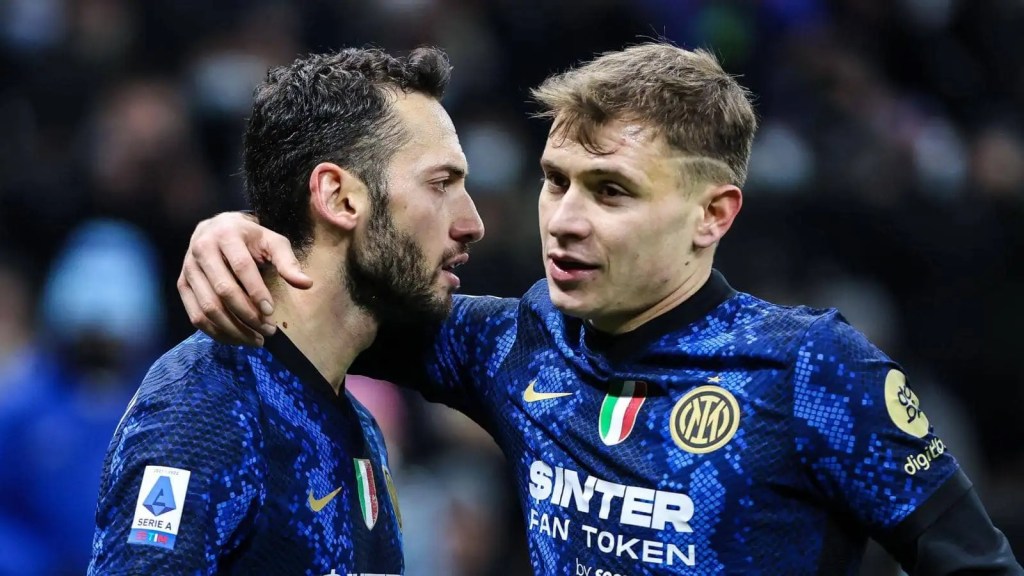
Inter’s wing-backs are arguably their most influential attacking weapons. Dumfries attacks the back post like a striker, often occupying the weak-side defender with aggressive diagonal runs. Dimarco, on the other hand, is more of a left-footed playmaker from wide zones — delivering early crosses, looping balls to the back post, or cutting inside to combine. Together, they stretch defences horizontally while midfielders and strikers compress them vertically.

When Inter enter the final third, they are clinical in their chaos. The system suddenly becomes less structured and more instinctive — the box floods with bodies, and the patterns revolve around cutbacks, second balls, and late runners. The midfield pushes high, the wing-backs crash the box, and both strikers hover around the penalty spot. It’s not just about the first shot — it’s about occupying every zone where the rebound might fall.
Lautaro and Thuram complement each other perfectly. Lautaro is the link-man — dropping in, spinning off, drawing fouls — while Thuram provides direct running, height, and physicality. They rarely stay flat or static; instead, they split centre-backs, dart between lines, and combine in tight spaces. Their movements are less about flair, more about dislocation — forcing defenders into split-second decisions.
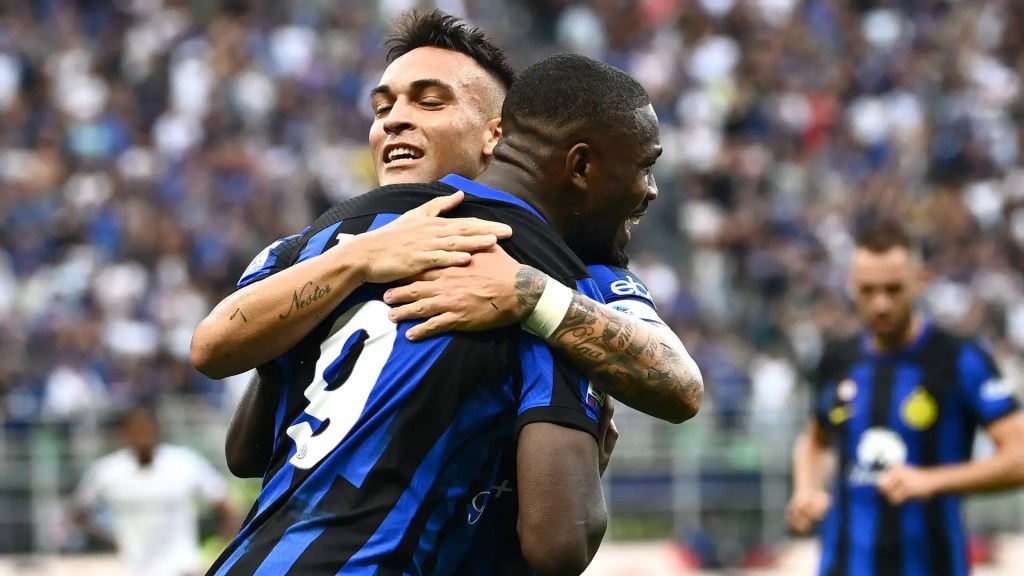
Inter’s ability to shift between a deep block and a high man-to-man press is rare among European elites. When pressing, they squeeze the pitch vertically, use cover shadows to block passing lanes, and rely on aggressive duels from centre-backs. But this is where the risk lies — particularly against a PSG side that excels at breaking the press through third-man combinations and positional rotations.
If the press isn’t perfectly timed, Inter could be exposed — especially in the intermediate zones between wing-back and wide centre-back. Players like Dembélé and Kvaratskhelia thrive in those half-spaces. Vitinha, meanwhile, is precisely the type of player who can draw Barella or Mkhitaryan out and thread the killer pass into a runner’s path.
Yet Inzaghi’s Inter don’t panic. Their system is built on phases — not controlling every moment, but controlling the moments that matter. It’s structure as strategy, but chaos as the finishing move. In Munich, that balance — between precision and unpredictability could be the difference between heartbreak and history.
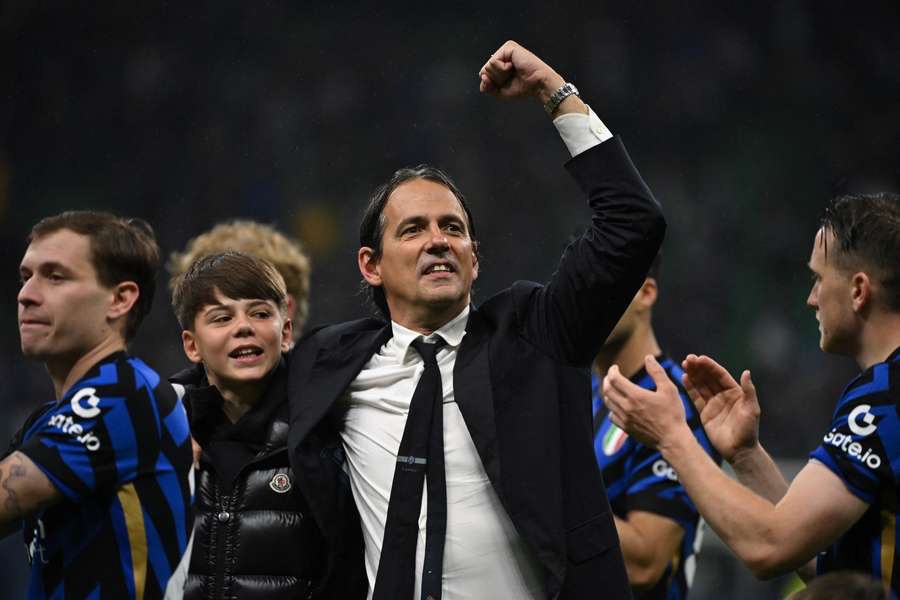
Luis Enrique’s Fluid Revolution
Paris Saint-Germain under Luis Enrique have evolved into one of the most tactically fascinating attacking outfits in Europe — a side no longer reliant on star names alone, but on fluidity, structure, and intelligent disruption. If previous PSG sides leaned heavily on individual brilliance to break games open, this version overwhelms teams with its collective orchestration.
The front three — typically Ousmane Dembélé, Khvicha Kvaratskhelia, and Désiré Doué (or sometimes Bradley Barcola) — are devastatingly unpredictable. Each offers a different flavour: Dembélé operates with high-tempo volatility, constantly drifting into central “off-spaces” to receive on the half-turn or attack the blindside of a retreating centre-back. Kvaratskhelia, by contrast, is a chaos agent from the left — an unorthodox dribbler who invites contact before slicing into inside channels. Doué, the youngest of the trio, adds verticality and positional intelligence, often making ghost runs beyond the defence or dropping deep to overload midfield zones.
These three do not play in fixed lanes. Instead, they interchange frequently — rotating flanks, pulling defenders out of shape, and collapsing defensive structures through movement rather than just pace or power. It is positional play layered with improvisation. And crucially, it is built to target the blindside — the space behind pressing midfielders or between defenders who are being dragged toward the ball.
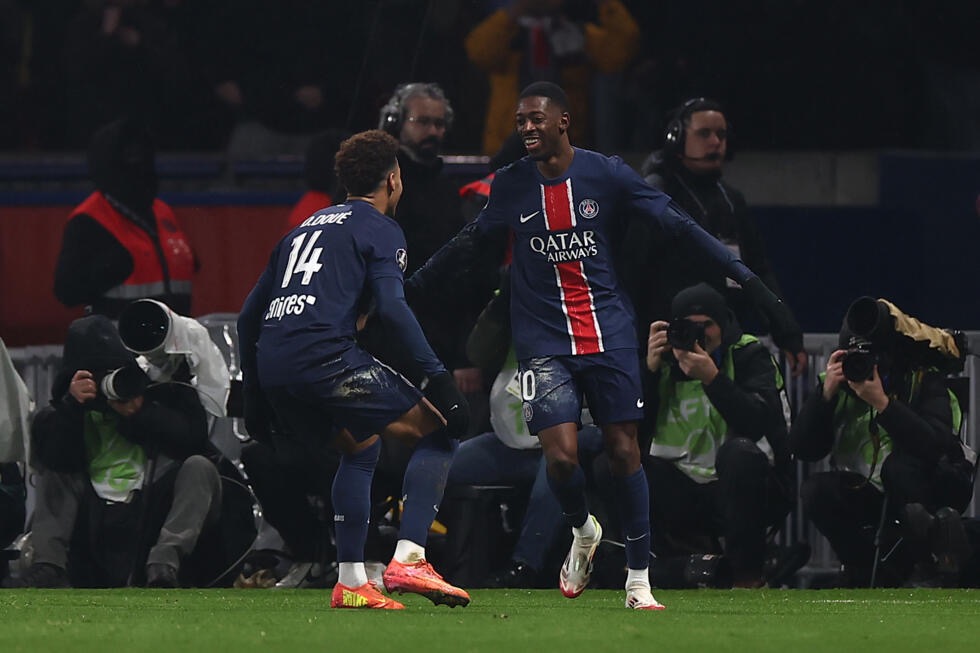
Behind them, the midfield trio of Vitinha, Fabián Ruiz, and João Neves offers a perfect blend of composure, progression, and pressing resistance. Vitinha is the metronome — dictating tempo and rhythm in tight spaces, drawing pressure to one side before releasing the ball into the half-space or triggering third-man combinations. His low centre of gravity and quick shifts in direction make him press-resistant and uniquely equipped to break through aggressive midfields.Ruiz plays a more stabilising role — often sitting between the lines to offer passing angles and recycle possession, while Neves adds vertical drive and tenacity, frequently stepping forward into pressing traps to disrupt or recover.
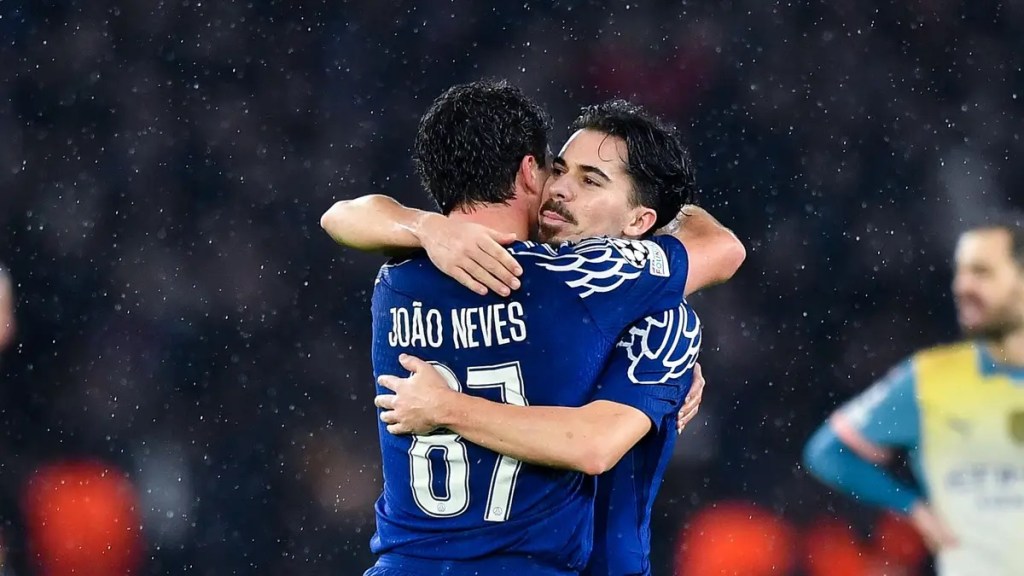
What separates PSG from other possession-heavy teams is their willingness to stretch teams vertically and horizontally. This is most evident in the roles of Achraf Hakimi and Nuno Mendes, two of the most aggressive and high-functioning full-backs in Europe. They play as de facto wide forwards in Enrique’s system — staying high and wide to stretch the backline, or underlapping into central zones when the wingers invert. Their overlapping runs often serve as decoys or late-arriving threats, creating additional decision points for defenders already overwhelmed by the movement of the front three. Tactically, PSG excel at breaking lines through the half-spaces, often inviting pressure only to exploit it ruthlessly. The structure is designed to provoke — pulling opposition midfielders out of shape before exploiting the space behind them. Vitinha’s ability to carry the ball through crowds or release a perfectly timed diagonal pass is central to this approach. PSG love to create third-man scenarios, where a short pass attracts a marker, followed by a vertical ball into a runner who was untracked.
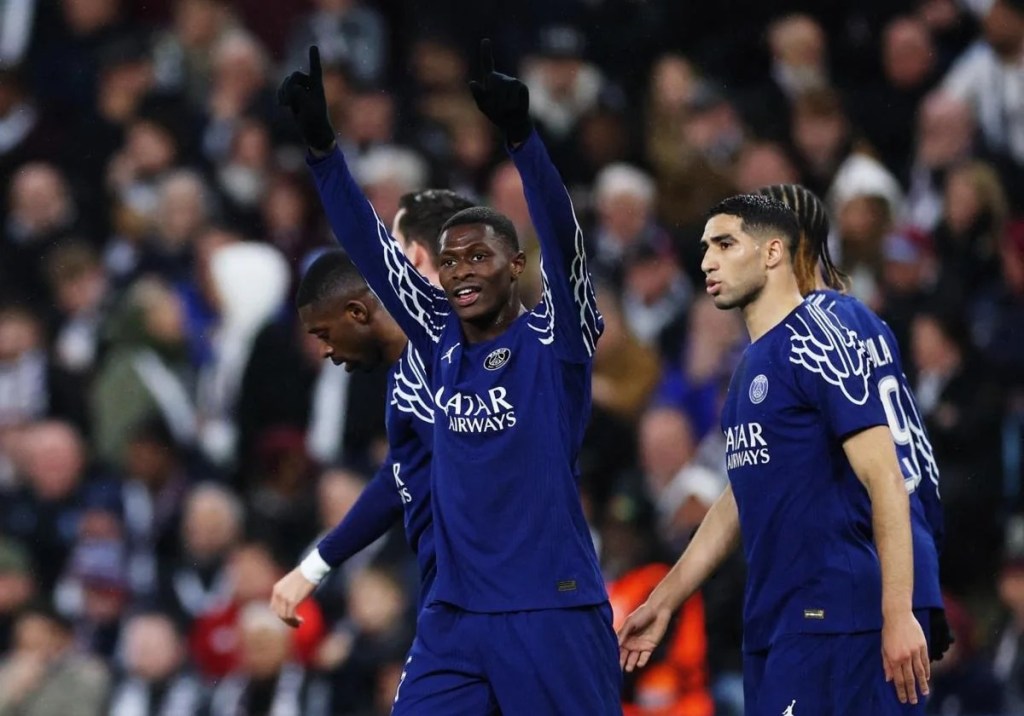
This system also features a false nine dynamic, most often expressed through Dembélé’s interior positioning. Instead of staying wide, he regularly occupies spaces between the lines or even deeper into midfield, acting as a connector rather than a pure outlet. This confounds traditional back threes, who are forced to make awkward decisions: follow him and leave space behind, or hold the line and allow him time on the ball.That positional fluidity is precisely what could trouble someone like Francesco Acerbi — a seasoned but conventional central defender who thrives in static matchups against physical strikers. Against Dembélé’s movement, Kvaratskhelia’s inside drifts, and Hakimi’s overlaps, he may find himself constantly pulled out of his comfort zone and exposed in isolation.
Yet for all the technical artistry and attacking complexity, what makes this PSG side different is their capacity for pragmatism. Luis Enrique is not dogmatic. The second leg of the semi-final against Arsenal was a masterclass in tactical compromise. Rather than press high and dominate possession, PSG retreated into a compact mid-block, absorbed pressure, and hit with surgical precision on the counter. It was a rare display of steel from a club long defined by silk.
In other words, this isn’t just a PSG that wants to dazzle — it’s a PSG that knows how to grind. And for a team long haunted by Champions League collapses, that evolution may prove just as important as any individual moment of brilliance.
Key Tactical Matchups
Acerbi vs Dembélé
Francesco Acerbi is as experienced and reliable a defender as they come, especially when facing traditional number nines. But his Achilles’ heel has always been agile attackers who operate between the lines. Ousmane Dembélé is tailor-made to exploit that. As a pseudo-false nine or drifting winger, Dembélé thrives in “off-spaces” — those half-channel pockets where centre-backs are unsure whether to follow or pass responsibility. If Dembélé pulls Acerbi out of the back three, he not only disrupts Inter’s defensive geometry but creates lanes for Kvaratskhelia or a surging Fabian Ruiz to exploit. It’s a matchup that could swing PSG’s way quickly if Inter don’t find the right level of compactness.
Dumfries vs Mendes
Two relentless engines go head-to-head down the flank. Denzel Dumfries offers Inter one of their most direct routes to goal — arriving late at the back post, bullying smaller full-backs, and generating aerial mismatches. But Nuno Mendes is no ordinary full-back. Fast, technical, and aggressive in 1v1s, he can both pin Dumfries back with his forward runs and track him defensively with elite recovery pace. For Inzaghi, the conundrum is real: allow Dumfries to roam forward and risk being exposed in transition, or keep him conservative and lose one of Inter’s best attacking outlets?
Lautaro vs Pacho
Lautaro Martínez isn’t just a poacher — he’s a connector, a creator, and a press-breaker. His chemistry with Thuram has defined Inter’s attack, and against PSG’s high line, his off-ball intelligence will be critical. On the other side, PSG’s Willian Pacho is quick, aggressive and composed — but still young and relatively untested at this level. If Lautaro can drag him wide, win aerial duels, or link with midfield runners like Barella and Mkhitaryan, it could force PSG’s back line into uncomfortable reshuffles. Expect Marquinhos to cover more ground than usual to protect the Ecuadorian.
Heart of the Contest
At the heart of Saturday’s final lies a fascinating midfield battle — one that pits PSG’s fluid, technically gifted trio of Vitinha, João Neves and Fabián Ruiz against Inter’s battle-hardened unit of Nicolò Barella, Hakan Çalhanoğlu and Henrikh Mkhitaryan.
For PSG, Vitinha is the architect. His unique ability to draw in pressure, twist away from markers using his low centre of gravity, and find progressive passes makes him fundamental to Enrique’s possession-based structure. He operates as the connective tissue between defence and attack, often dictating tempo in deep areas but also advancing into half-spaces when PSG push higher. João Neves, still just 19, has slotted seamlessly into this setup. He offers tenacity, ball-winning and positional maturity beyond his years. He acts as the pivot at the base of the midfield — less flashy than Vitinha but crucial in disrupting transitions and recycling possession. Then there’s Fabián Ruiz, the most vertical of the three. He makes third-man runs into the box, has the vision to slip passes through compact lines, and offers a goalscoring threat with late arrivals from midfield.
This trio is built on mobility, interchangeability and rhythm. All three are comfortable receiving under pressure and quick enough in their decisions to keep PSG ticking. But that composure will be put to the test. That’s because Inter’s midfield does not just compete — it constricts.
Hakan Çalhanoğlu, reinvented as a deep-lying playmaker under Inzaghi, plays the regista role with a mixture of elegance and grit. His range of passing allows Inter to switch quickly or find the feet of Lautaro and Thuram in dangerous pockets. Crucially, he’s become more disciplined defensively — sitting in front of the back three and anchoring the structure when Inter drop into a 5-3-2. Barella, by contrast, is the chaos agent. Few midfielders cover more ground with greater intensity. He presses relentlessly, breaks lines with carries, and is one of the most disruptive midfielders in Europe when the game becomes transitional. He will look to get tight to Vitinha or Neves when PSG attempt to build through the centre — and if he times his challenges right, Barella can flip the rhythm of a match in a second. And then there’s Mkhitaryan, the glue. At 35, his legs aren’t what they were, but his intelligence makes him invaluable. He’s the midfielder who adapts — tucking into deeper areas when Inter are pinned back, or bursting beyond Thuram to provide an extra attacking option in the final third. His understanding of timing and space will be vital when Inter look to bypass PSG’s man-oriented press and link up between lines.
This matchup is not simply a question of who has more flair. It’s about who controls the zones between the boxes, who can escape the pressure when their backs are to the wall, and who finds those subtle angles that unlock elite defences. In many ways, this final could be defined by whether PSG’s midfield can impose their rhythm — short, sharp, incisive — or if Inter’s trio can turn it into a fight, force transitions, and win the game in moments rather than patterns.
Narratives, Stakes & Legacy
The Champions League final is never just a football match. It’s a referendum on ideas, a collision of philosophies, and a canvas upon which history can be rewritten. For Paris Saint-Germain, this is more than a shot at silverware. It’s a chance to complete the clean sweep — Ligue 1, Coupe de France, and now the Champions League — and to finally shake off the label of European nearly-men. A win would make them only the second French club to lift the continent’s most coveted trophy. But even more than that, it would cement the tactical and cultural transformation brought about by Luis Enrique.
Gone is the Galáctico-era PSG of marketing muscle and mercurial moods. In its place stands a side built on balance, movement, and cohesion. This final isn’t just about lifting a trophy — it’s about shedding ghosts, particularly the scars of the 2020 final loss to Bayern Munich. That night in Lisbon, PSG were undone by fine margins. This time, they return with structure, steel, and a system designed to sustain them.
And for ownership, this is the moment of reckoning. Since Qatar Sports Investments took over in 2011, the Champions League has been the ultimate target — the trophy they’ve pursued with billions in spending and a revolving door of managers. At times, it has felt like a project more about vanity than validation. But under Enrique, there is now a sense of purpose — a project rooted not in names, but in nuance. Victory in Munich would be more than a sporting triumph. It would be the culmination of a decade-long gamble finally paying off — not just a statement of dominance, but a seal of legitimacy.
Yet opposite them stands a team equally hungry for legacy. Inter Milan are no strangers to this stage. They’ve lifted the European Cup three times. They’ve worn the crown of a treble-winner. But in this iteration, they represent something different — not nostalgia, but resilience. Simone Inzaghi’s Inter are underdogs by budget, not by belief. They have already eliminated titans — Bayern Munich, Barcelona — and done so not by sitting deep or riding luck, but by executing a game plan with precision and purpose.
They don’t fear the ball, nor do they rely on it. This is a team built on synergy, not superstardom. In an era of mega-spending and headline signings, Inter are a reminder that coaching, structure, and tactical clarity can still outmanoeuvre money. What they’ve achieved on a fraction of PSG’s budget is remarkable — and what lies ahead could be even greater.
There’s personal redemption in the air, too. Just two years ago, they stood in Istanbul, toe-to-toe with Manchester City — only to fall to a single goal. That was a lesson in the cruelty of finals. And now, they stand one win away from not just redemption, but resurrection. And what sweeter narrative than this? In 2023, they were denied their treble dream by a team that completed it. In 2025, they could deny one. A victory would write a new chapter for a club built on heritage but defined by evolution.
So while PSG chase history and closure, Inter chase justice and glory. Two sides, two paths, one prize. Legacy, for both, is 90 minutes away.




 Mission Podcast
Leave a comment