
King Kohli’s Constitution – India’s Greatest Blueprint for Test Success
Written by Haroon Irshad

No one really wanted to talk about this with me on a podcast, so the higher-ups told me to write an article about it instead. So, here we go!
Virat Kohli’s retirement from Test cricket got me thinking — not so much about Kohli the batter, but Kohli the captain, the leader, the revolutionary.
Because if we’re honest, Kohli the Test batter didn’t retire this week. He retired the moment he stepped down as captain. His career as a pure batter never quite broke into the game’s rarest air. No 10,000 runs. No average above 50. That top table — the one where Tendulkar, Ponting, Kallis, and Smith dine — is probably just out of reach.
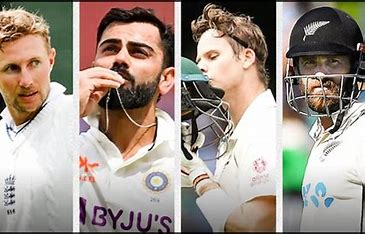
Kohli may not be the most prolific batter of the Fab Four, but he is the most transformative leader among them. Root, for all his runs, failed to galvanise England. Williamson led with grace, but inherited a golden generation. Smith? Brilliant, but not a builder, lest we forget Cape Town 2017. Kohli, in contrast, built a kingdom out of chaos.
It means even more, knowing that the test captaincy for India was a poison chalice. Success was a given at home however, away from home, India were never really successful. But, if we know Virat Kohli – he was never going to back away from having the chance to be a true revolutionary. But, how did the prince become king in the test arena?
The Beginning, A Fire Lit in Australia
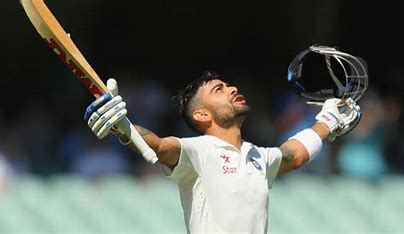
It all started in 2014. Australia away. Virat Kohli had suffered at the hands of the England bowlers that summer, exposed to the moving ball and experiencing a tumultuous time with the bat. But in Australia, Kohli showed he wasn’t going to be broken.
He scored 692 runs in four Tests, second only to Steven Smith (769). Four centuries. Twin tons at The Gabba. That first Test? He almost pulled off a heist with the bat. But Kohli’s journey wasn’t some polished fairy tale. In that same match, after sending off David Warner with Varun Aaron, karma immediately struck back — Warner wasn’t out due to an Aaron no-ball. As they say, that’s cricket. A true leveller.
Kohli was fined 30% of his match fee. He was criticised for negativity, for petulance. But even in those moments, you could tell he was learning. You could see the boy was turning into a man. A prince stepping into his crown, forged from the fire of failure on English soil, to rising on his destined throne as the king of India’s test cricket revolution.
The Revolution’s Foundation
When MS Dhoni retired, Kohli inherited more than just a team — he inherited an expectation, a nation hungry for dominance in the longest format. India hadn’t been truly feared overseas in decades. At home, they were kings. Abroad, they were pilgrims.
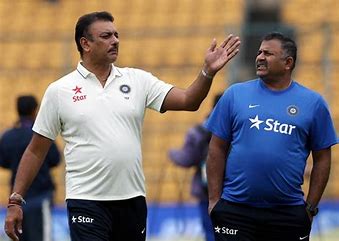
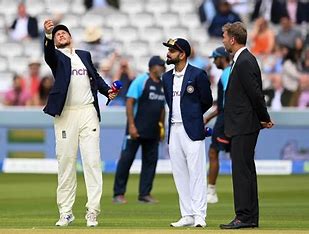
Kohli, alongside Ravi Shastri (left) and Bharat Arun (right), decided to rip up the old playbook. They didn’t want to compete overseas — they wanted to conquer. And that required weapons India didn’t yet possess: fast bowlers who could bowl teams out on day one, not wait for day five turners. So, how did the renaissance come to pass?
The Pace Renaissance
It’s easy to forget now, but India’s pace stocks had plummeted far worse than Wall Street in 1929. At one point. Ishant Sharma averaged 37 after 70 Tests. Under Kohli, he averaged 25.85 in the next 43.
Mohammed Shami — brilliant but brittle — was transformed into a fitness machine, taking 168 wickets at 24.82 under Kohli’s captaincy.
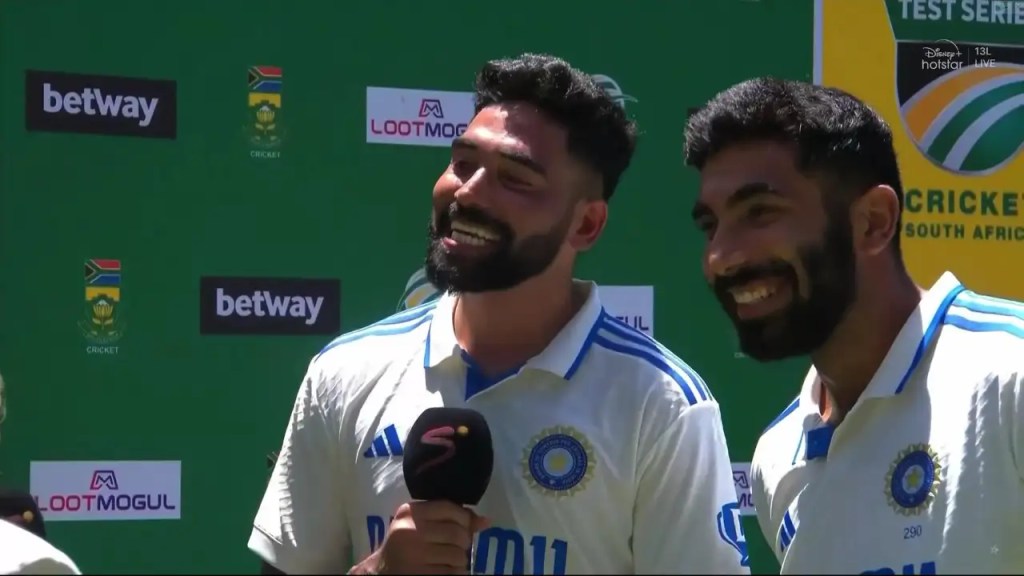
Mohammed Siraj, plucked from the IPL and thrown into the fire in Australia, emerged battle-hardened and is one of India’s frontline bowlers today.
In the recent series Down Under, Harshit Rana was given a debut and displayed the DNA of a fire that could only be brought about by someone like Kohli. His unrelenting mentality allowed him to dismiss Travis Head as his first test wicket.
But the crown jewel? Jasprit Bumrah. Maybe Bumrah would’ve played Test cricket anyway. But without Kohli, would he have been trusted, backed, and unleashed as the attack leader in South Africa, England, and Australia? I’d rather not imagine that universe. It’s a bleak one — fast bowling in India without a figure like Kohli is a story half-written.
Spin Twins and Tactical Brilliance
Then there’s Ravichandran Ashwin — long viewed as a home-track bully. Kohli believed otherwise. Ashwin became trusted overseas. Jadeja matured into a reliable second spear. Together, they were India’s double-headed spin monster.
Kohli set attacking fields, hunted for wickets, and pushed games forward. His strategy was simple but profound: you can’t win Tests without taking 20 wickets. Shastri and Kohli didn’t just say it — he built a team to do it, no matter the pitch, no matter the continent.
Mind Over Matter, A Proven Track Record
But tactics and talent aren’t enough. Kohli instilled mentality. A ruthless, unapologetic desire to win. He made India a relentless force to be reckoned with. Statistically, its proven too!
At home? Unbeaten in 8 years. Abroad? Competitive in every single series. His win rate of 58.82% is the highest by any Indian Test captain — and third-best globally among captains who’ve led in 25+ Tests, behind only Ricky Ponting and Steve Waugh.
Kohli’s Bat: The Sword and the Shield
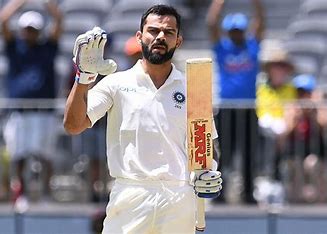
With the bat, Kohli didn’t just survive captaincy — he thrived under it. And, as much as I said he isn’t at the highest table of test cricket as a batter altogether, he certainly is one of the best to ever do it with the bat.
He led by example. He elevated Rohit Sharma into a consistent opener. He unleashed Rishabh Pant, India’s chaos merchant. And through it all, Cheteshwar Pujara stood beside him — the Wall 2.0 — forming India’s backbone alongside Kohli.
- Average as captain: 54.80 (no captaincy, 41.13)
- Most double hundreds by a Test captain: 7 (Lara has 5)
- Test hundreds as captain: 20 (Smith has 5 more)
Lord’s 2021: Kohli’s Finest Hour
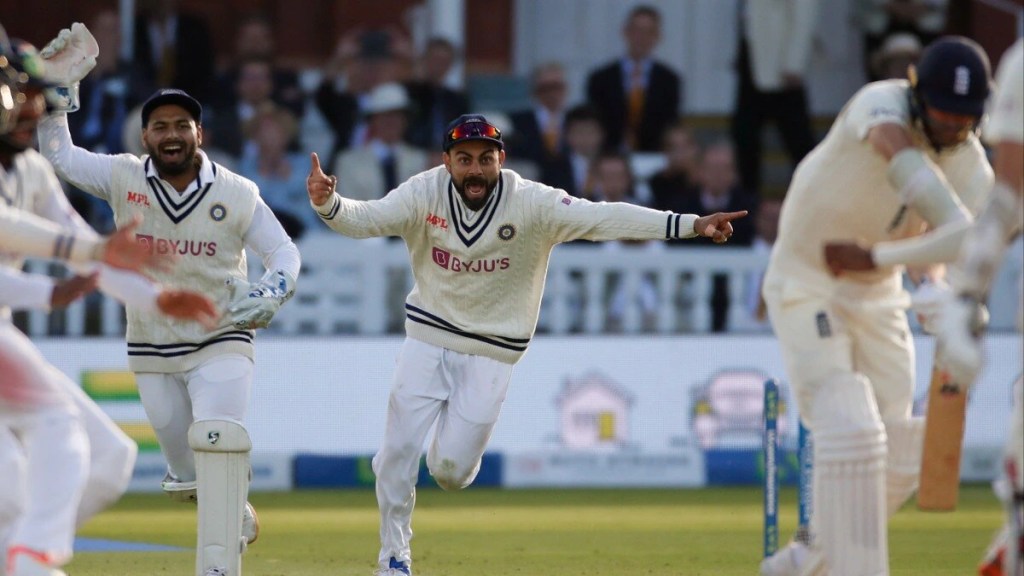
There’s one day I’ll never forget: Lord’s, 2021. As an England fan, surely there was no way England could lose this test match?
But, as usual, I was proven wrong. India’s tail wags as Shami and Bumrah frustrate England, Joe Root’s tactics were easily readable as Shami and Bumrah put England to the sword with the bat. But Kohli delays the declaration after lunch, leaving pundits baffled. Why wait? Why not put England in? Did Kohli forget he could wave his arms and the declaration would be done?
But the Indian thinktank and Kohli concocted something nasty for the English to deal with, an all-out assault intended to blow away England. 10 minutes after lunch, the declaration comes. England fold in just under 52 overs on Day 5. Kohli’s gamble works. India conquer HQ. 40 minutes preparation time was a lot more than 10 minutes and straight out into the heat of battle. Kohli knew this better than anyone, as he led his troops to a famous win.
That Test was his masterpiece — part aggression, part calculation, all heart.
The Constitution of a King
So, what is Kohli’s Constitution for Test success?
- A bowling unit built to take 20 wickets anywhere in the world
- A batting lineup that could bat long and counter-attack
- A fielding side fitter than ever before
- And above all — a team that believed it could win in any situation
The crown was never too heavy for Kohli, it fit perfectly. And even if the next generation doesn’t replicate his success, the blueprint is there. The fundamentals are intact, the talent pool in India is vast; it just needs the right nurturing.
Virat Kohli didn’t just play Test cricket. He changed it. He gave a billion people belief — and built a kingdom that didn’t fear the dark. The sleeping giant roams around the test cricket world, and its first true test without Virat Kohli the influence will be seen when India tour England this year in an era-defining series for both sides.
A character undoubtedly disliked at the beginning of his journey but like most cricket fans, in the end I did come to love him as a person and as a player. Not like that matters to Virat Kohli anyway!





 Mission Podcast
Leave a comment